

Airbus Defence and Space set to resume A400M deliveries
June 19, 2015
Lifting of restrictions permits all aircraft to fly subject to completion of checks
Airbus Defence and Space is about to recommence deliveries of Airbus A400M aircraft following the lifting of all remaining flight restrictions on new production aircraft by Spanish regulator DGAM yesterday.
As a result, all A400Ms are now cleared for flight provided they have undergone the checks specified by the manufacturer in the Alert Operator Transmission (AOT) of 19 May 2015. Airbus Defence and Space´s own three development aircraft, and the 12 aircraft delivered to customers prior to the accident were not affected by the restrictions.
The production plan for the year is under review following the accident but currently is still targeting at least 13 aircraft in 2015, plus up to four more subject to flight-test results due this summer.
Two aircraft which were due for delivery at the time of the accident are expected to be delivered in a matter of days with a number of others to follow in the coming weeks.
Head of Military Aircraft Fernando Alonso said: “We appreciate the Spanish authorities’ timely action in restoring our permission to fly without restriction as well as our customers’ patience and support in recent weeks. We are working hard to bring the schedule back on track while continuing to support the investigation.”
Russian Helicopters showcases new military models at Army-2015
June 16, 2015
Moscow / 16 June 2015
Russian Helicopters (part of State Corporation Rostec) is taking part in the international military technology forum Army-2015, which runs from 16 to 19 June in Kubinka, Moscow Region. Participants and visitors will have the opportunity to see Russian Helicopters’ military models, which are in service in the Russian Armed Forces, and also upcoming developments and export models.
“Russian Helicopters is keenly focused on the development of the domestic military industrial complex,” Russian Helicopters CEO Alexander Mikheev said. “In close collaboration with the Russian Ministry of Defence, we are developing new models of helicopters, which ensure our country’s defences. Russian Helicopters is successfully fulfilling the state defence order, equipping the Russian Armed Forces with new helicopters in strict accordance with the supply schedules set out.”
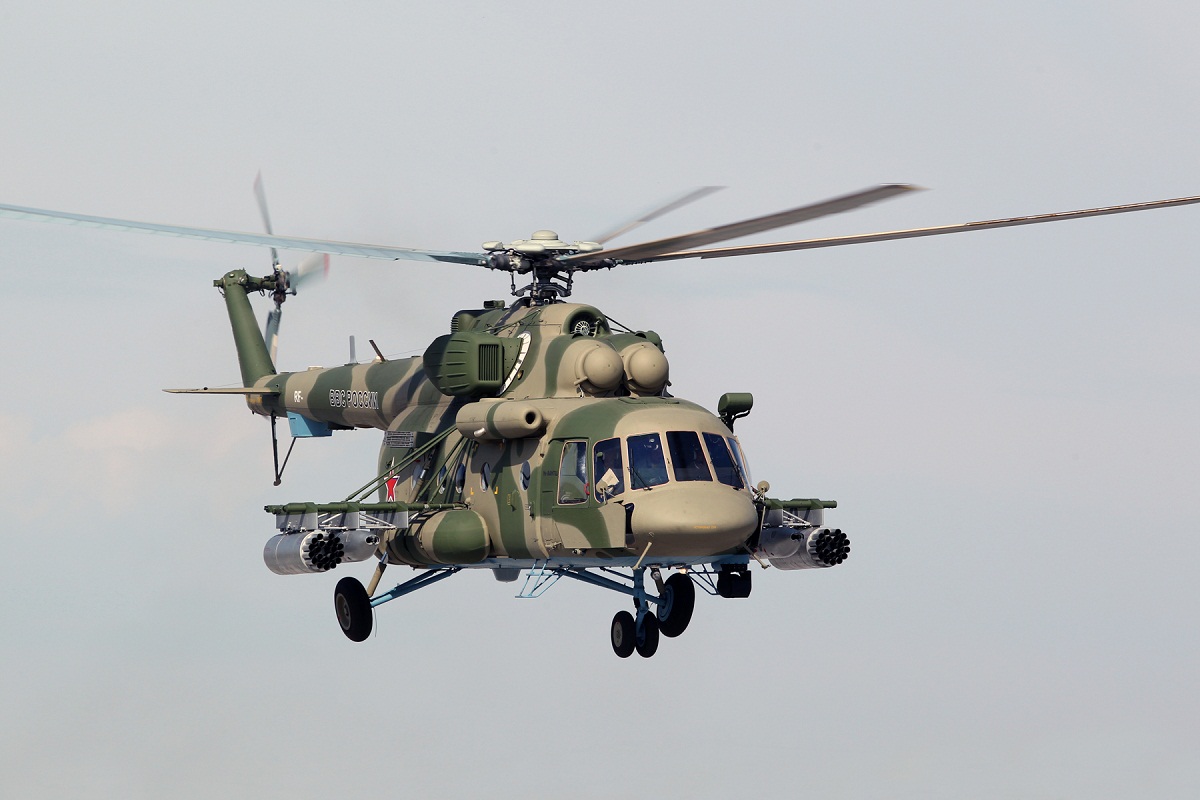
Visitors to Army-2015 will be able to see the shipborne Ka-52K, modernised Mi-28N(E) Night Hunter with dual controls, the Mi-8AMTSh-V, Mi-17V-5 and Ka-226T. New commercial helicopters, the Mi-171A2 and Mi-38 will also be showcased at the forum.
The Ka-52K is designed for the Russian Navy. It is developed on the basis of the Ka-52 Alligator reconnaissance and combat helicopter, boasts resilient anti-corrosion treatment, folding blades and wings in addition to other technical solutions vital in order to be shipborne. Its main on-board systems have been adapted for marine use. This new model is currently undergoing flight tests.
The Mi-8AMTSh-V is a new version of the Mi-8AMTSh military transport helicopter adopted by the Russian military. This modernised helicopter has upgraded flight capabilities, and under the import-substitution programme many of the internationally-sourced components have been replaced by new Russian-made alternatives, delivering improved capabilities and expanding its operational range.
The Arctic version of the military transport helicopter, the Mi-8AMTSh-VA, is being developed on the basis of the Mi-8AMTSh-V. This helicopter is highly autonomous. It is designed to operate in low temperatures and during polar night, and is fitted with the latest avionics specially adapted for operation in the Arctic. The Mi-8AMTSh-VA offers Arctic units of Russia’s Armed Forces significantly greater operational effectiveness, and will play a key role in implementing Arctic development programmes.
The Mi-28N(E) Night Hunter combat helicopter with dual controls is a modification of the helicopter designed for training military pilots. The Mi-28N(E) Night Hunter with dual controls can act as an attack helicopter.
The light multirole Ka-226T helicopter was developed on the basis of the Ka-226, which is also in service with the Russian Armed Forces and state special aviation divisions. The Ka-226T’s coaxial design affords it enhanced manoeuvrability, and means that it can land at small sites including in built up urban areas. The Ka-226T is equipped with the latest avionics, boasts low noise levels and meets current environmental standards. In March 2015 Russian helicopters received additional IAC AR type certificate for the multirole Ka-226T helicopter as a modification of the series-produced Ka-226.
The latest Mi-171A2 and Mi-38 helicopters are currently undergoing flight tests. These models are designed incorporating the latest technologies and solutions, and their entry onto the market will further reinforce Russian Helicopters’ position as one of the world’s leading helicopter designers and producers.
Army-2015 is organised by the Russian Defence Ministry. The event aims to create the necessary conditions for identifying promising technology, engineering, and other solutions, with a view to their subsequent incorporation in the production of weapons, military and specialised technology, and also the creation of a positive image of the Russian Armed Forces. Russian Helicopters’ extensive involvement in the forum is testimony to the degree of collaboration and level of importance placed on this cooperation with the Defence Ministry.
Beechcraft delivers four T-6 military training aircraft to United States Army
June 15, 2015
PARIS, France (June 15, 2015) – Beechcraft Defense Company LLC, a Textron Inc. (NYSE:TXT) company, today announced at the Paris Airshow that it recently delivered four Beechcraft T-6D military aircraft to the United States Army. These aircraft, which are part of the Joint Primary Aircraft Training Systems (JPATS) program, will be stationed at Redstone Arsenal in Huntsville, Alabama, and will replace the Beechcraft T-34 aircraft currently in use at the facility.
“We are pleased that the U.S. Army is joining the U.S. Air Force, U.S. Navy and countries around the world in trusting the T-6 to prepare and support their combat flying forces,” said Russ Bartlett, president, Beechcraft Defense Company. “This versatile platform comprised of four aircraft will be used in a variety of training and mission support applications.”
Upon arrival in Huntsville, the four T-6D aircraft will perform such missions as: Operational Support Airlift, utility, training, chase, airspeed calibration support, cloud physics research, and stores component research and qualification.
About the T-6D
The Beechcraft T-6D is a hybrid of the T-6B and T-6C trainers. It features new standard avionics, featuring integrated mission computers, up-front control panels, multi-function displays and a Heads-Up Display. The Army T-6D aircraft have a hard point wing to allow carriage of up to six wing-mounted pylons and two external fuel tanks.
Strength of the T-6 platform
The Beechcraft T-6 delivers world-class training capability and is ideally suited for teaching the most basic introductory flight training tasks through the more challenging and complex advanced training missions that could previously only be accomplished in far more expensive jet aircraft. The T-6 is being used in more than 20 countries around the world to train pilots, navigators, and weapons systems operators. To date, Beechcraft has delivered more than 850 T-6 trainers, which have amassed more than 2.5 million flight hours.
Boeing to Build Third All-Electric Propulsion Satellite for ABS
June 12, 2015
EL SEGUNDO, Calif., June 12, 2015 – Boeing [NYSE: BA] is on contract to build ABS-8, the third all-electric propulsion 702SP (small platform) satellite for ABS, a commercial satellite provider based in Bermuda and Hong Kong. This satellite will expand broadcast and enterprise services to Australia, New Zealand, the Middle East, Russia, South Asia and Southeast Asia.
“The procurement of ABS-8 shows our confidence and trust with Boeing on the all-electric propulsion 702SP platform technology. The prescribed satellite payload of C-, Ku- and Ka-beams with wide beams and high throughput capacity would serve the government, mobility, telecoms, DTH (direct-to-home) and rural broadband sectors,” said Tom Choi, CEO of ABS. “ABS is committed to continually innovate and improve the competitiveness of the FSS industry for the betterment of our customers.”
“The decision by ABS to order a third Boeing 702SP satellite is a testament to our customer’s confidence in the capabilities of this satellite,” said Mark Spiwak, president of Boeing Satellite Systems International, Inc. “With the innovative all-electric propulsion design, Boeing is able to maximize payload while decreasing overall satellite mass and cost.”
ABS-8 is scheduled for delivery in 2017. With a payload of more than 9kW (kilowatts), it will be the highest power payload to date on a Boeing 702SP. ABS-8 will replace ABS-7 at the 116.1degE orbital location. The ABS-8 payload will include traditional wide beam coverage and a high powered Ku- and Ka-band multi-spot high throughput satellite (HTS) configuration.
ABS’ first all-electric propulsion 702SP satellite (ABS-3A) was launched earlier this year in a stacked configuration using Boeing-patented technology. A second ABS 702SP satellite (ABS-2A) is expected to be launched in the fourth quarter.
GULF COAST AVIONICS COMPLETES GARMIN G1000 PANEL UPGRADE ON A COLOMBIAN ARMY KING AIR B200
April 30, 2015
First-of-its-kind project was done in collaboration with
Corporación de la Industria Aeronáutica Colombiana in Bogotá.
Lakeland, FL (April 30, 2015) — Rick Garcia, President and CEO, Gulf Coast Avionics Corporation announced today that the company has recently completed its first Garmin G1000 panel upgrade on a Colombian Air Army King Air B200.
“This project had many unique aspects to it,” Garcia said. “It was our (GCA’s) first Garmin G1000 installation in a King Air B200 and it was the first time we ever did an installation in cooperation with the Corporación de la Industria Aeronáutica Colombiana (CIAC) in Bogotá, Colombia.”
“Its ultimate success is a true testament to not only the technical knowledge and experience of our team here in Lakeland, but also the cooperative efforts by them and the installers at CIAC,” he said. “It was a marvelous team effort.”
Andy Smith, GCA’s Installation Sales Manager explained that all of the B200’s panel design, engineering and wiring harness fabrication was done at the company’s facility in Lakeland then shipped down to CIAC’s aircraft maintenance center in Bogotá.
“We went down to CIAC’s facility early on then worked remotely with their technicians on-site,” Smith said. “They handled all of the hands-on part of the installation and did a great job. I went back down when it was completed for the final configuration.”
“As any shop can attest, installing a G1000 avionics suite is not an easy task – especially the first time,” he said. “After seeing the finished panel, my hat went off to the guys at CIAC. They did a tremendous job with the project.”
Embraer Defense & Security to promote full portfolio of integrated solutions at FAM 2015 in Mexico
April 20, 2015
São José dos Campos, Brazil, April 17, 2015 – Embraer Defense & Security will attend the FAM-Feria Aeroespacial Mexico 2015, which takes place April 22-25 at Base Aérea Militar N° 1, in Santa Lucía, Mexico.
The Company will be located at Booth E-I08 (Pavilion E) and will promote a broad range of integrated solutions that combine a high technological level and operational efficiency at competitive acquisition and operating costs. This includes the A-29 Super Tucano light attack airplane and advanced trainer as well as the new KC-390 military airlifter and tanker. The A-29 Super Tucano was selected for the U.S. Air Force’s Light Air Support program to perform counter insurgency missions in Afghanistan. The KC-390, which has performed its first flight in February this year, is designed to set new standards in its class, at a lower operational cost and higher availability rate due to lower maintenance downtime. Its great flexibility to perform a wide range of missions such as transport and airdropping of cargo and troops, aerial refueling, search and rescue, and forest fire response, among others, will also translate into savings to customers since they can perform more missions with a single platform. On May 20, 2014, Embraer and the Brazilian Air Force signed the serial production contract for the delivery of 28 KC-390 aircraft and initial logistic support. Besides the order from the Brazilian Air Force, there are current purchase intentions from other countries, for a total of 32 additional aircraft.
Leader in the aerospace and defense industry of Latin America, Embraer Defense & Security offers a complete line of integrated solutions such as C4I (Command, Control, Communication, Computers and Intelligence Center) applications, leading edge technologies in the production of radars, advanced information and communication systems, integrated systems for border monitoring and surveillance, as well as military and government transportation aircraft. With a growing presence on the global market, Embraer Defense & Security products are present in 50 armed forces.
Brazilian Over-The-Horizon Radar Site Breaks Ground
April 7, 2015
LAAD 2015 – IACIT’s Over the Horizon (OTH) radar project broke ground this month at a coastal site in the South of Brazil. Backed up by transfer of technological knowhow from IAI-ELTA, the project is being conducted with the support of the Brazilian Navy.
After receiving the necessary clearance from local authorities, IACIT began the installation and assembly of the first Brazilian OTH. The radar system is developed with the support of the Brazilian Federal Funding Authority for Studies and Projects (FINEP) and with the technological cooperation of IAI’s ELTA Group.
The innovative surface-wave radar design, operating in the High-Frequency (HF) band, is capable of Over the Horizon surveillance for hundreds of miles at sea. The radar employs phased array technology and unique interference cancellation techniques which provide reliable and persistent coverage of the broader maritime area at all times, regardless of atmospheric conditions or sea state.
This OTH radar application focuses on the Blue Amazon Managing System (SisGAAz) and differs from conventional line of sight radars in that it uses the electromagnetic wave propagation phenomena.
These advanced maritime surveillance features are combined with IACIT’s oceanic environmental HF capacities. IACIT has been developing an HF Radar solution since 2010 for oceanic environmental weather and sea surface surveillance, as well as pollution control and to assist prediction of environmental hazards such as storms and tsunamis.
IAI has demonstrated a continuously growing involvement in the Brazilian defense market, as evidenced by the teaming agreement for investment and cooperation signed by ELTA in 2013 with electronic company IACIT.
“We view this project as an important milestone towards persistent, affordable, reliable and efficient coverage of a broad Brazilian maritime area”, said Mr. Nisim Hadas, IAI Executive VP & ELTA president. “We are excited to share our experience with our local partners in favor of Brazil’s unique defense needs.”
“The technological development process requires time and considerable financial resources, depending on the complexity of the project. The expected assimilation of technology, including by the National Defense Strategic (END), provides a significant leap for technologies already tested outside Brazil with validated solutions. In the case of a Strategic Defense Company (EED) such as IACIT, transfer of technology and know-how are mandatory to ensure continuous production in Brazil. said IACIT president Luiz Teixeira. “The OTH development has propelled IACIT’s capabilities years forward and will provide a strategic advantage for the Brazilian Navy as well as important lifesaving information for environmental control agencies”.
Expanding cooperation between IAI and IACIT
April 7, 2015
LAAD 2015 – IACIT, the Brazilian strategic defense company is preparing to open in Brazil a modern, world-class maintenance facility for the local support and maintenance of IAI-ELTA’s airborne radars.
This facility is part of the transfer-of-technology and knowhow by IACIT and its technologic partner IAI-ELTA, and will serve the growing number of ELM-2032 Fire Control Radars in use by the Brazilian Navy, as well as the ELM-2022 Maritime Patrol radar in operation with the Brazilian Air Force. The facility includes highly-automated test equipment to provide rapid and reliable turnaround times for the radar systems.
The ELM-2032 Fire Control Radar was provided for the Brazilian Navy A4 Skyhawk aircraft which underwent highly successful avionic and system upgrades. The ELM-2022 radar is in operational use by the Brazilian Air Force C-295 and P-3 fleet for its maritime patrol, surveillance, and search and rescue (SAR) missions.
“IACIT, with its extensive experience in delivering successful integrated logistic support for projects throughout Brazil, will provide our customer with high system availability by means of a short turnaround time for their airborne radars”, said Mr. Luiz Teixeira, IACIT CEO and President-Director. “IACIT’s airborne radar maintenance facility will provide a complete testing system for the state of the art equipment available on the market.”
“We are continuously committed to providing maintenance and support activities in Brazil, and establishing an in-country facility together with IACIT is a clear expression of this policy,” said Mr. Nisim Hadas, IAI Executive VP & ELTA president, “We believe that in the future this facility can expand as a support hub for additional Latin American customers.”
“IAI Sees Brazil as a Strategic Partner” Says Joseph Weiss, IAI’s President & CEO, Prior to the LAAD Exhibition in Brazil
April 7, 2015
– Israel Aerospace Industries (IAI) will participate in LAAD 2015, the largest aerospace, defense and homeland security event in Latin America, taking place in Rio de Janeiro, Brazil, from April 14 – 17, (Hall#4 Israeli Pavilion, booth H40).
With many current activities in Brazil, and a range of ongoing projects throughout Latin America, IAI offers a wide spectrum of solutions, some of them through two local strategic defense companies, IACIT and Avionics.
Visitors to IAI’s booth will be introduced to the broad range of technologies, products and services provided by IAI, including UAVs, Airborne Early Warning and Control (AEW&C) suites suitable for a variety of aircraft, electro-optical sensors, radars designed for operation under extreme conditions and precision guided weapons systems.
Joseph Weiss, IAI’s President and CEO said:” IAI sees South America in general, and Brazil in particular, as a ‘growth engine’, and offers a large spectrum of products, backed by wide technological knowhow and matchless operational experience. Through working in Brazil extensively for the last few years, we have been exposed to the country’s unique needs and requirements. IAI plans to expand its activities in Brazil by means of cooperation with local companies,” said Weiss.
IAI’s booth is larger than ever before. For the first time, IAI will demonstrate two interactive scenarios, presenting integrated solutions, one in the maritime domain, and the second, a concept for a safe and smart city.
Saab Selects AEL Sistemas as a New Gripen Supplier in Brazil
February 26, 2015
Defence and security company Saab has selected AEL Sistemas (AEL) as a new supplier for the Gripen NG in Brazil. AEL will provide the wide area display (WAD) and the head-up display (HUD), which will be integrated in the Gripen NG for Brazil as part of the F-X2 contract. The WAD and HUD development programme commenced in January 2015. Saab and AEL have also signed a contract for transfer of technology.
The new avionics systems programme will run over four years and includes development, integration and production work to be performed in Porto Alegre. System integration work will be undertaken by Saab and Embraer.
The WAD for Brazil’s Gripen NG aircraft is a single intelligent and full-redundant multi-purpose display system, full-colour, large-screen (19 x 8 in) with continuous image presentation and the state-of-the-art touch-screen controls capability. It is the primary source of all flight and mission information in the cockpit.
AEL will also develop a new HUD for Brazil’s Gripen NG aircraft. The HUD provides essential flight and mission information to the pilot when looking ‘heads up’ out of the cockpit.
“Incorporating these advanced products from AEL into Brazil’s Gripen NG further enhances the aircraft. This agreement also shows our continuing commitment to develop and produce the Gripen in close partnership with Brazilian industry,” says Ulf Nilsson, head of Saab business area Aeronautics.
“We are proud of the opportunity to take part in the development process of Gripen NG and to be able to introduce the latest displays, computer and software technologies into a next generation fighter. I am sure it will further enhance the successful contribution of AEL to the Brazilian Military Forces,” says Sérgio Horta, President AEL.
An extensive flight test campaign will be conducted in close co-operation with AEL at Saab’s site in Linköping, Sweden, to demonstrate and validate the new equipment.
The transfer of technology contract with AEL will focus on further development of the human machine interface (HMI) for advanced fighters, along with workshops for avionics maintenance. Activity under this contract will commence in the second half of 2015 at Saab in Linköping and will include theoretical courses and on-the-job-training.
<Comentarios de Elenita
 |
Estimados lectores:
La historia que sigue es sobre una carrera aérea que se realiza la semana entrante. O sea, que se enterarán del resultado después de leer este artículo. Todos... Read more » |
 |

|
 | ||